


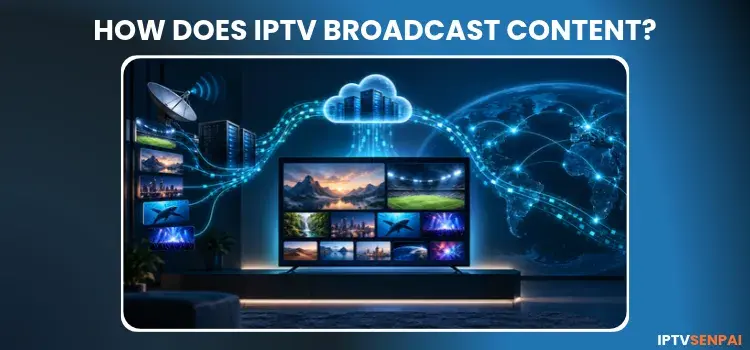
IPTV delivers television and on-demand video through Internet Protocol (IP) networks. Providers receive or store content, compress it, and send it to streaming servers or managed networks. Your TV or app receives the data and plays the video.
Unlike cable, satellite, and traditional broadcast TV, IPTV allows viewers to access live channels, movies, and TV shows through compatible devices, using an IP-based delivery system.
Behind every stream is a delivery chain: the original content source, video encoding, streaming infrastructure, and a compatible playback app. The exact process varies depending on the provider and whether the content is live or on-demand.
This guide explains how IPTV broadcasts content, the technologies behind live TV and VOD, and how unverified IPTV operators obtain copyrighted broadcasts, distribute streams, and resell subscriptions.
If you use an IPTV service, consider using a VPN to protect your privacy alongside provider’s broadcasting rights. This encrypts your internet traffic and helps keep your streaming activity private from your ISP, but it does not make unauthorized streams legal.
Is IPTV Broadcasting Legal?
IPTV broadcasting is a legal technology. A provider must still have the rights or authorization needed to distribute its offered television channels, films, and live events.
Licensed IPTV services receive content through authorized agreements. Non-licensed operators retransmit or sell access to copyrighted broadcasts without permission, even if they use ordinary streaming protocols and legitimate media-player software.
The European Union Agency for Criminal Justice Cooperation (Eurojust) distinguishes legitimate IPTV technology from unlicensed services. Laws and subscriber liability depend on the country and circumstances.
How Does The IPTV Distribution Network Work?
Illegal IPTV distribution networks usually involve 3 groups: upstream suppliers, resellers, and subscribers. Each performs a different role in delivering copyrighted content without authorization.
Upstream IPTV Suppliers
Upstream suppliers obtain or manage unauthorized video feeds and operate the infrastructure required to distribute them. They may provide channels and on-demand content to several IPTV services simultaneously.
IPTV Resellers
Resellers purchase subscription access from upstream suppliers and sell it to customers, often advertising through websites and social media. Many don’t own streaming servers or manage original broadcasts. Instead, they focus on marketing subscriptions, managing customer accounts, and collecting payments.
IPTV Subscribers
Subscribers receive account credentials, M3U playlists/Xtreme Codes, or access to IPTV applications. These allow them to watch available television channels and on-demand content on compatible streaming devices.
A typical IPTV service moves video from its source to the viewer through five main stages. The exact workflow depends on whether the provider uses managed multicast IPTV or internet-based streaming.
Providers obtain live television feeds or stored VOD content from licensed or unauthorized sources. Capture equipment receives broadcast signals when needed and prepares them for processing.
Encoders compress audio and video using standards such as H.264 and H.265. This reduces bandwidth requirements and prepares broadcasts for streaming over IP networks.
Technologies such as HLS and MPEG-DASH package video into smaller segments for playback. When multiple quality options are available, adaptive streaming can adjust video quality according to network conditions.
Streaming servers and CDNs deliver video to connected viewers, while some managed IPTV networks use multicast for live channels. Overloaded servers or disrupted feeds may cause buffering and outages.
M3U playlists contain stream URLs that compatible players use to organize channels. Xtream Codes-style connections use server details and account credentials to retrieve available live TV channels and VOD libraries.
When authentication is required, subscribers sign in through a compatible IPTV player. The player retrieves the selected stream, decodes the video, and displays it on the viewer’s device.
Live TV, VOD, and Catch-Up TV Broadcast
IPTV can deliver scheduled live channels, on-demand video libraries, and previously broadcast programs. Each reaches the viewer over an IP network, but the source and playback timing are different.
1. Live TV
A broadcaster supplies a continuous live channel feed. The provider encodes the signal and sends it over an IP network, allowing viewers to watch the program as it airs.
Managed IPTV networks may use multicast to deliver live channels. Internet-based platforms commonly distribute live video through unicast streaming, including HLS.
2. Video-on-Demand (VOD)
Video-on-demand (VOD) delivers stored movies and episodes when viewers select them. Instead of receiving a continuously broadcast channel, the player requests video from a provider’s media library.
Viewers can usually pause, rewind, and resume playback. However, the availability of movies and TV shows depends on the provider’s content library and licensing rights.
3. Catch-Up TV
Catch-up TV allows viewers to watch programs after their original broadcast. A provider records or retains eligible shows and makes the video available for later playback.
It’s availability and viewing periods depend on the service and its content rights. Playback uses stored video, much like VOD, rather than the current live channel feed.
How Do IPTV Providers Steal Copyrighted Content?
Unverified IPTV services obtain content through several methods. These include capturing broadcasts from legitimate subscriptions, sourcing unauthorized feeds from larger suppliers, and copying movies or television programs.
1. Capturing Live TV Broadcasts
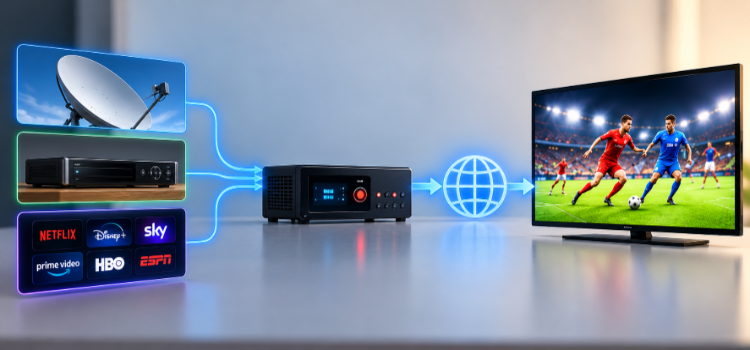
Some operators use legitimate cable, satellite, or streaming subscriptions to access premium television channels. They capture these broadcasts and retransmit them over the internet without permission.
For example, a 2023 INTERPOL investigation uncovered an operation that used 40 Korean cable television subscriptions to illegally rebroadcast channels to customers in Indonesia.
2. Obtaining Streams From Other IPTV Networks
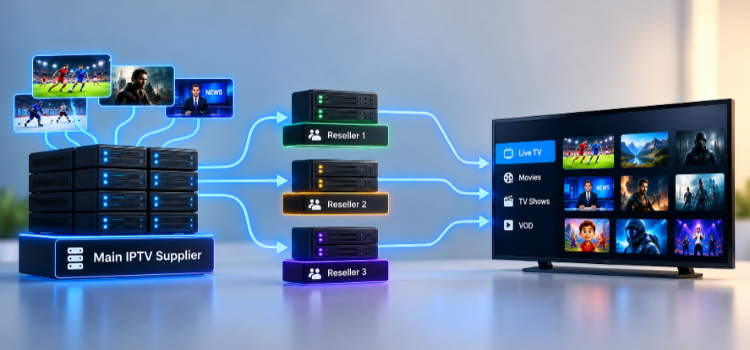
Not every unverified IPTV provider captures broadcasts directly. Many purchase unauthorized streaming access from larger IPTV suppliers that already manage content feeds and distribution servers.
These smaller providers then resell the streams under their own brands. This allows them to offer premium channels without maintaining the original content acquisition infrastructure.
3. Copying Movies and TV Shows
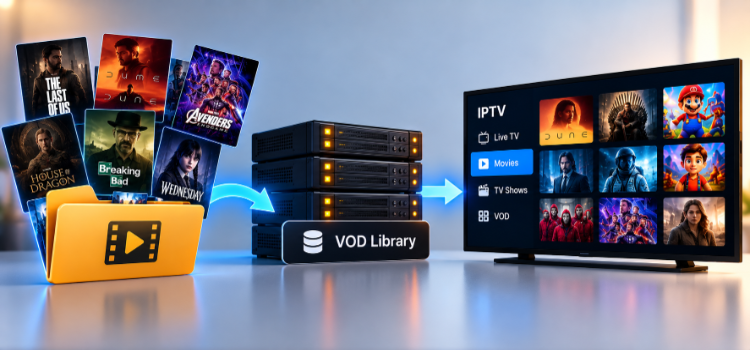
Unverified IPTV providers may also obtain copyrighted movies and television series from unauthorized sources. These video files are stored on servers and added to video-on-demand (VOD) libraries.
Unlike live channels, VOD content can be accessed whenever subscribers select a movie or episode.
How Do IPTV Providers Make Money?
Unverified IPTV operators primarily earn revenue through monthly, quarterly, and yearly subscription plans. Larger suppliers may also sell access to resellers, who then distribute subscriptions to their own customers.
Licensed broadcasters must pay for content distribution rights while Non-licensed operators avoid these licensing costs. This allows them to charge much less while generating revenue from subscription sales.
FAQ’s
1. Does IPTV Need a Satellite Dish?
Viewers normally need an internet or managed broadband connection and a compatible device. A provider may use satellite feeds behind the scenes, but subscribers do not necessarily need a dish.
2. What Is an IPTV Headend?
An IPTV headend is a system that receives content feeds and prepares them for delivery, such as encoding, processing, and organizing channels. It is part of the provider’s infrastructure.
3. Do M3U Playlists Contain TV Channels?
An M3U playlist usually lists media addresses and related information. A compatible player retrieves the actual video stream from the referenced source.
4. Does Every IPTV Service Use Multicast?
No. Multicast is common on managed IPTV networks. Public-internet streaming commonly uses unicast connections, including HLS and MPEG-DASH.
5. Can a VPN Make Unauthorized IPTV Legal?
No. A VPN can encrypt internet traffic, but it does not grant a provider broadcasting rights or make unauthorized distribution legal.
Conclusion: How IPTV Broadcasting Works
IPTV broadcasts content by receiving video, encoding it, distributing streams over IP networks, and playing them on compatible devices. The underlying delivery method may be multicast on a managed network or unicast over the public internet.
Live TV, VOD, and catch-up use different playback models, while HLS, MPEG-DASH, servers, and playlists help organize and deliver internet-based streams.
These technologies are not illegal by themselves. The key difference between licensed IPTV and non-licensed IPTV services is whether the provider has the rights to broadcast or redistribute the content.

